
Responsibility Before Recognition: Building Leadership At Home Before The Title Arrives
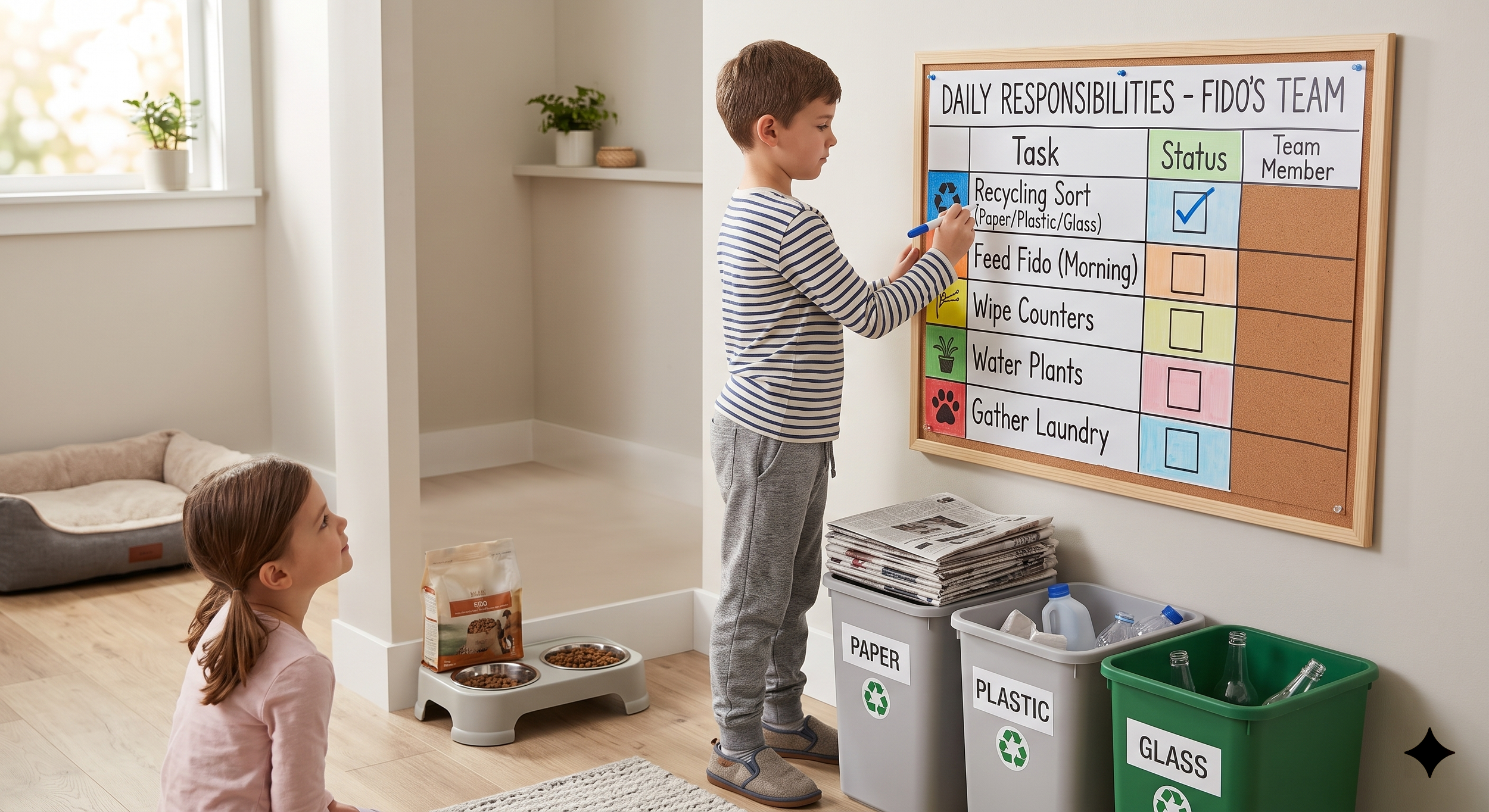
Leadership Is Not A Switch That School Flips
Many parents treat leadership as something that activates the day a child becomes a prefect, class monitor or CCA leader. Until that moment arrives, responsibility quietly slides at home, because no leadership moment appears to be happening. But leadership is not a switch. It is a habit that is either being built each week, or it is not — and by the time a title arrives, the habits that should have preceded it are often missing. (Read more in our guide on why leadership titles don't build leadership in students).
Across twenty years of student leadership programmes in Singapore schools, the pattern is consistent. Confident, well-spoken students frequently struggle in their first leadership role because nobody had ever tested them with genuine responsibility. Quieter students who never volunteered for an exco position often thrive the moment they are trusted with something that matters. The difference is rarely talent. It is practice — years of it at home, or none at all.
The Responsibility Before Recognition Framework
Four practices build leadership capacity long before any badge appears, and each can begin in an ordinary household this week.
1. Ownership
Ownership means the child, not the parent, notices when something needs doing. It shifts the locus of responsibility from parent-as-manager to child-as-manager, training a habit no title can install later. Crucially, genuine ownership carries the risk of failure — if a parent rescues it every time, it was never really the child's. One parent stopped issuing daily reminders about a school bag; a single uncomfortable morning without a needed item taught more than a year of reminders had. (For insights on fostering personal initiative, see our personal development programmes and our article on trustworthiness vs performance).
2. Contribution
Responsibility that affects only the child teaches compliance. Responsibility that affects someone else teaches leadership. The difference lies between tidying a room on instruction and being the person the family's dinner depends on tonight. Connecting effort to a consequence another person feels is the emotional core of leadership, and children accustomed to it adapt far faster to CCA and group project demands. One family began rotating Sunday dinner preparation among secondary-aged children, and the child on duty visibly rose to the responsibility. (This interpersonal accountability connects directly to skills developed in our communication programmes and study skills modules).
3. Consequence
Removing every consequence removes the lesson. Natural results, positive and negative, are the most honest feedback a child receives, and intervening to prevent every negative outcome teaches that responsibility carries no real weight. This is not punishment — it is age-appropriate consequence, which is what trains judgement over time. A father allowed his Secondary 2 daughter to manage her own allowance and phone data without mid-week top-ups; running out on a Thursday once was uncomfortable, and it did not happen again. (Read more on establishing real-world decision-making in Closing the Consequence Gap and explore practical financial independence through our financial literacy programmes).
4. Consistency
One good week is a moment; ten good weeks is a habit. A responsibility handed over once teaches little, because repetition is what converts instruction into something internalised. Consistency also builds parental trust, which allows responsibility to expand. Children read inconsistency accurately — dropping an expectation after a fortnight teaches them it was never truly theirs. Students who held the same small home responsibility for over a year consistently showed stronger follow-through in school leadership roles than first-time title-holders. (Learn how long-term consistency shapes future direction in our education and career guidance (ECG) programmes).
Where To Begin This Week
Hand over full ownership of one recurring household task tonight, and stop managing or reminding. Choose one responsibility whose outcome is felt by another family member. And when something goes wrong through a small, safe choice, resist fixing it and let the consequence teach. Leadership does not begin with a title — it begins with ownership, contribution, consequence, and consistency, practised long before recognition arrives.
To learn more about how we partner with schools and families to build grounded leadership habits, explore our full suite of holistic student programmes or get in touch with our team directly.
Frequently Asked Questions
At what age should children start taking on real responsibility at home?
Upper primary is a practical starting point for genuine ownership of a recurring task, though the principle applies earlier in simpler forms. What matters is that the responsibility is truly the child's to manage rather than a supervised chore.
What is the difference between a chore and genuine ownership?
A chore is completed under supervision when instructed. Ownership means the child notices the task needs doing and manages it without prompting, including carrying the discomfort of occasionally forgetting.
Should parents let children fail at responsibilities?
Within safe, age-appropriate limits, yes. Natural consequences provide the most honest feedback available, and consistently preventing negative outcomes teaches children that responsibility carries no real weight.
How long should a household responsibility be maintained?
At least a month, and ideally far longer. Repetition over weeks is what converts an instruction into an internalised habit, and inconsistency signals to a child that the responsibility was never genuinely theirs.