

Personal Leadership · Chung Cheng High School (Main) · Secondary 2 and 3 Peer Support Leaders · August 2026
Lead Self, Then Lead Others: Two Afternoons with the Peer Support Leaders of Chung Cheng High School (Main)
Peer Support Leaders are good at the visible part of the role. They run recess events, plan bonding activities and turn up when everyone can see them. The harder part is quieter: stepping up for a classmate who is struggling, handling a difficult case with care, and keeping going when the task is no longer fun or public.
So when Chung Cheng High School (Main) asked Leaven Academy to train its Peer Support Leaders, the brief was not more confidence. It was motivation that holds when nobody is watching. We planned two Thursday afternoons that followed one journey: lead yourself first, then lead others.
Three groups ran side by side, each with its own coach: the Secondary 2 leaders, the Secondary 3 leaders and the Secondary 3 executive committee. Each group worked at the level that fitted where it was in the role.
What Chung Cheng High School (Main) Needed
The school's Peer Support Leaders already did the enjoyable work well. The gap was in the work no one claps for. When leaders serve mainly to be seen, their commitment fades the moment the task stops being public. The school already had words for this in its own motto, 立己达人: establish yourself first, then help others succeed. It wanted its leaders to move from serving for recognition to serving from conviction, and it wanted the training to fit a two-year plan: the Secondary 2 leaders this year, the Secondary 3 leaders and the executive committee as the next step. That meant three groups with three different needs, trained on the same two afternoons.
How We Designed It
Each group was matched to a level of our 4R Leadership Framework. The Secondary 2 leaders worked on Level 1, Responsibilities: self-worth, self-motivation and being a role model who serves rather than seeks to be seen. The Secondary 3 leaders worked on Level 2, Relationships: listening, giving and receiving feedback, handling conflict and supporting a peer under stress. The executive committee worked on Level 4, Reproduction: mentoring younger leaders and growing the board.
Every activity followed the Leaven Learning Cycle: experience, reflection, insight, behaviour and consequence. Students did something first, talked about what happened, drew out the lesson and then committed to a change. The first afternoon was about leading self. The second turned outward to leading others, and each group closed with a pledge or a plan for the term ahead.
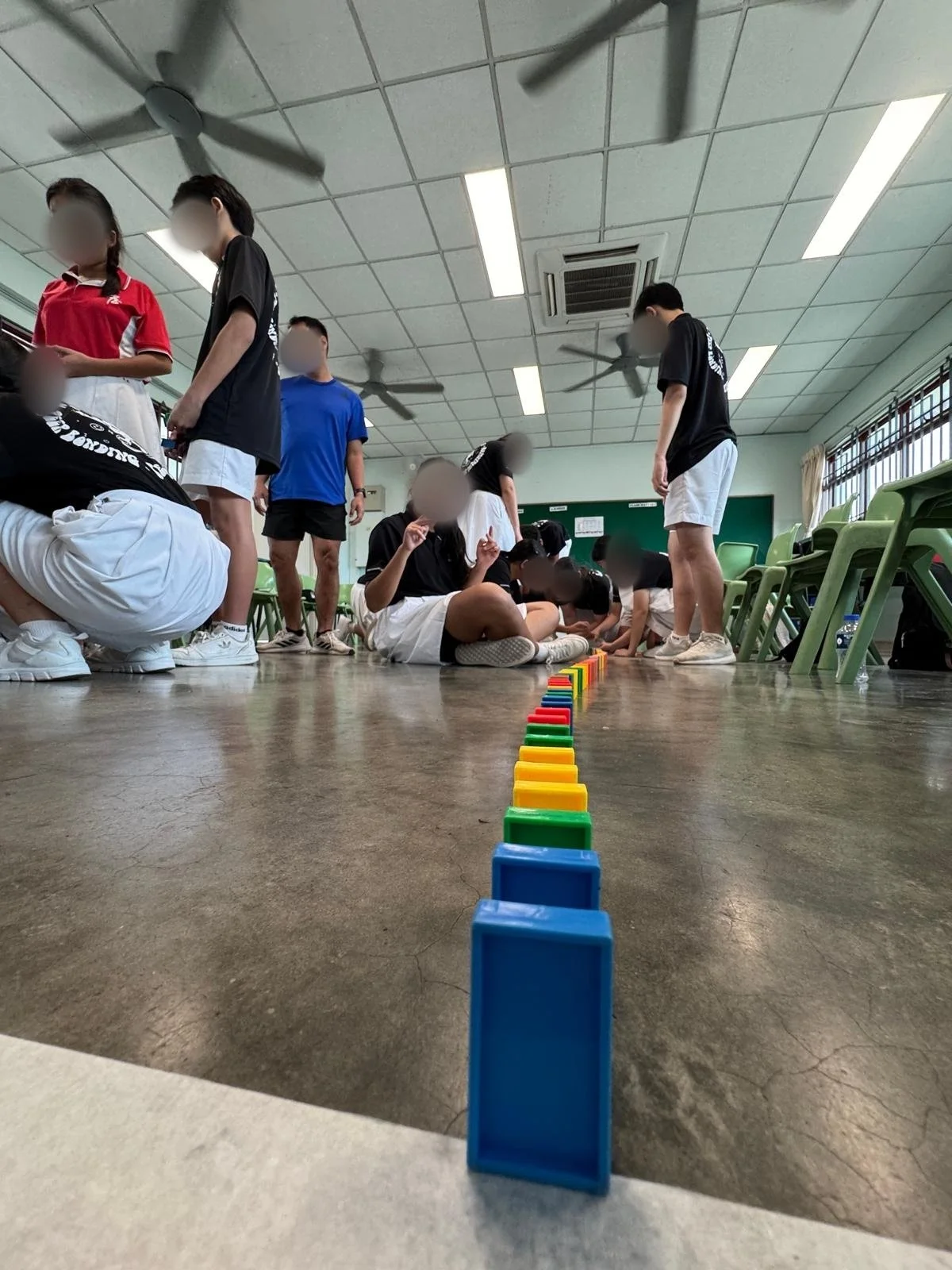
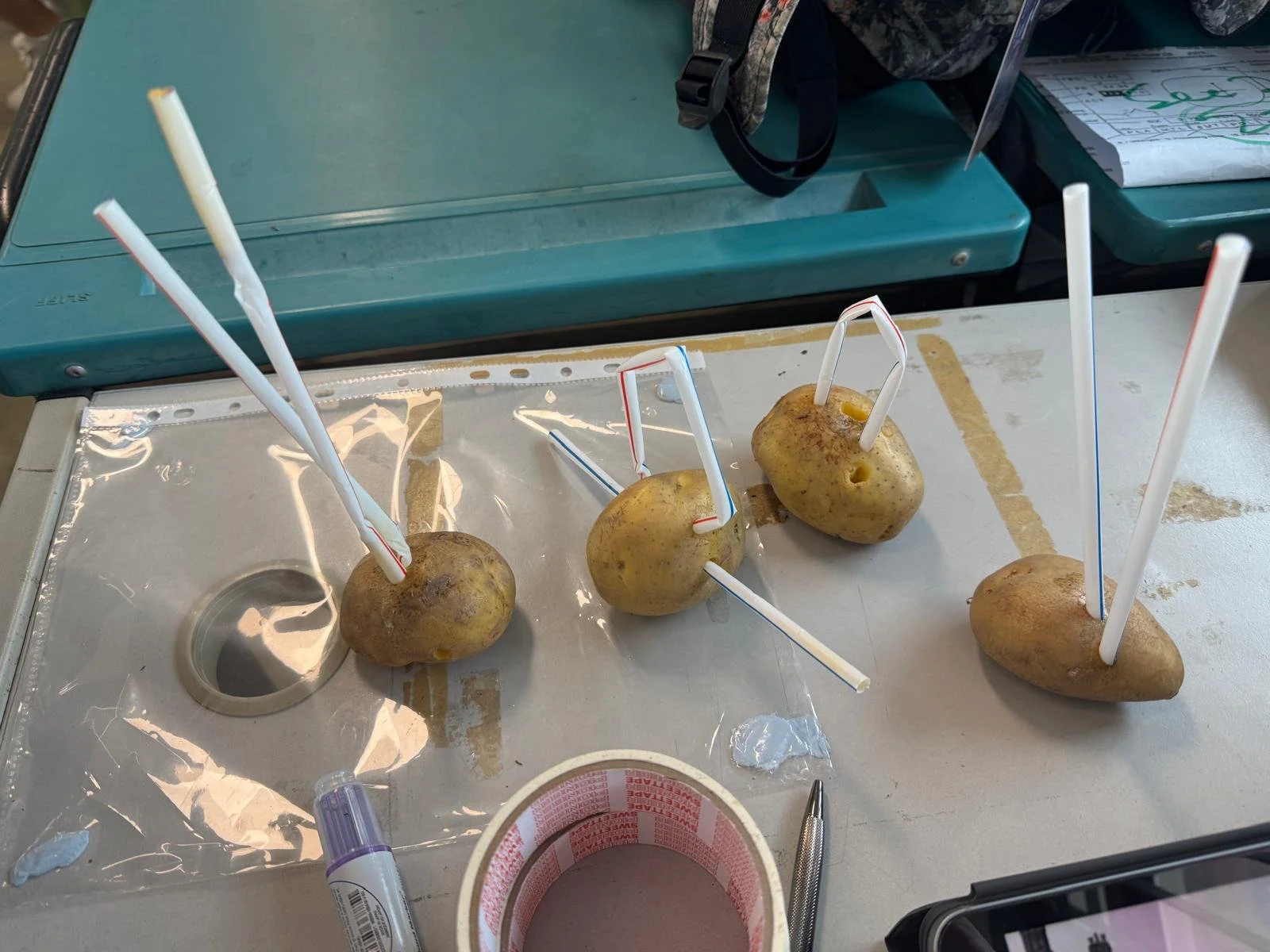
In practice, that meant building domino chains where only one member could see the pattern, a Potato Challenge to name the barriers that hold a leader back, Cup Flip, Jump In Jump Out and Guess The Drawing to feel how a team really works, activities on handling conflict and supporting a stressed peer, and, for the executive committee, a board-growth plan and a mentoring checklist.
The Moment That Mattered Most
The executive committee's last activity on the second afternoon was an appreciation exercise. Each member wrote about the others. When we asked what they liked most, two of them named it: "Writing the appreciation notes at the end of the session", and "the activity at the end where we have to write about each other like a sort of appreciation." For a committee whose job is to grow and keep a team of peer leaders, that was the point. Morale is not a slogan on a poster. It is a habit of noticing what the people beside you do, and saying so.
What the Numbers Said
Across the three groups and both sessions, the Peer Support Leaders rated the programme's overall effectiveness at 92.5% and coach effectiveness at 93.8%, with 48 participants over five curriculum hours. In the Secondary 2 group's second session, 12 of the 15 who completed the form gave the top rating to "I benefitted from the programme."
Three Things That Made the Difference
One school, three levels. The Secondary 2 leaders, the Secondary 3 leaders and the executive committee were not given the same workshop. Each worked on the level of the 4R Leadership Framework that matched its stage, on the same afternoons and with its own coach.
Self first, then others. The first afternoon asked each leader why they serve. The second asked how they serve. Leaders who have answered the first question carry the second further, especially when the work is unseen.
Doing before telling. Students built, played and worked through cases before they heard the lesson named. As one Secondary 3 leader put it, they liked the domino activity because "it challenged us to communicate within ourselves without talking".
Thinking About Something Similar for Your Student Leaders?
Leaven Academy works with primary schools, secondary schools, junior colleges, polytechnics, ITE colleges and youth organisations across Singapore to build leadership, teamwork and communication through practice rather than talks. You can read more about our student leadership programmes.
If your peer support, prefect or student council leaders could use the same kind of hands-on preparation, we would be glad to talk through what that could look like for your school. Get in touch.
“When the instructor gave us space to interact and share our personal thoughts without judgement and instead, encouragement.”
“The karate video part because it shows that the efforts all lead to something even if you can’t see it”
“Very funny and very engaging and very real with us with not using the cookie cutter method”