
Personal Development · Lakeside Primary School · Primary 1 and Primary 2 · September 2026
Stop, Think, Do: The Morning 440 Lower Primary Pupils Practised Self-Control
A Primary 2 pupil flips a plastic cup, and it lands the wrong way. Then again, and again. Somewhere between the attempts, the frustration arrives, and it arrives faster than the words to describe it. That is precisely the moment the Cup Flip activity is built to create, because it is the moment a seven year old most needs a way to pause.
For six and seven year olds, the space between knowing what to do and being able to do it without a reminder is not a discipline issue. It is a developmental one. Starting a task without a prompt, staying with it until it is done, and naming a big feeling before it becomes a big reaction are genuinely hard things at this age.
Lakeside Primary School asked Leaven Academy to work on exactly that space with its two youngest levels. On a single morning in September 2026, every Primary 1 and Primary 2 class took part, eight classes to a level, each with its own coach.
What Lakeside Primary School Needed
The school had already built a strong executive functioning culture, carried by two mascots its Primary 1 and Primary 2 pupils knew well: On-task Tiger and Sensible Seal. What it wanted was a structured, hands-on way to bring that culture to life in two priority areas: sustained attention and task initiation for Primary 1, with On-task Tiger, and emotional control and response inhibition for Primary 2, with Sensible Seal. It asked for minimal writing at Primary 1, and the programme was to work alongside what the school already does rather than introduce something new. The school engaged Leaven Academy to design and deliver a 90-minute session for each level, for every class, on the same morning.
How We Designed It
Both sessions ran on the Leaven Learning Cycle, our applied form of Kolb's Experiential Learning Cycle, moving every class through Experience, Reflection, Insight and Behaviour. At this age we deliberately stopped the cycle at Behaviour, because asking a six year old to project how today's choice changes tomorrow sits beyond typical lower primary development. Each part of the session was anchored to On-task Tiger or Sensible Seal, so the pupils met familiar guides rather than new ones.
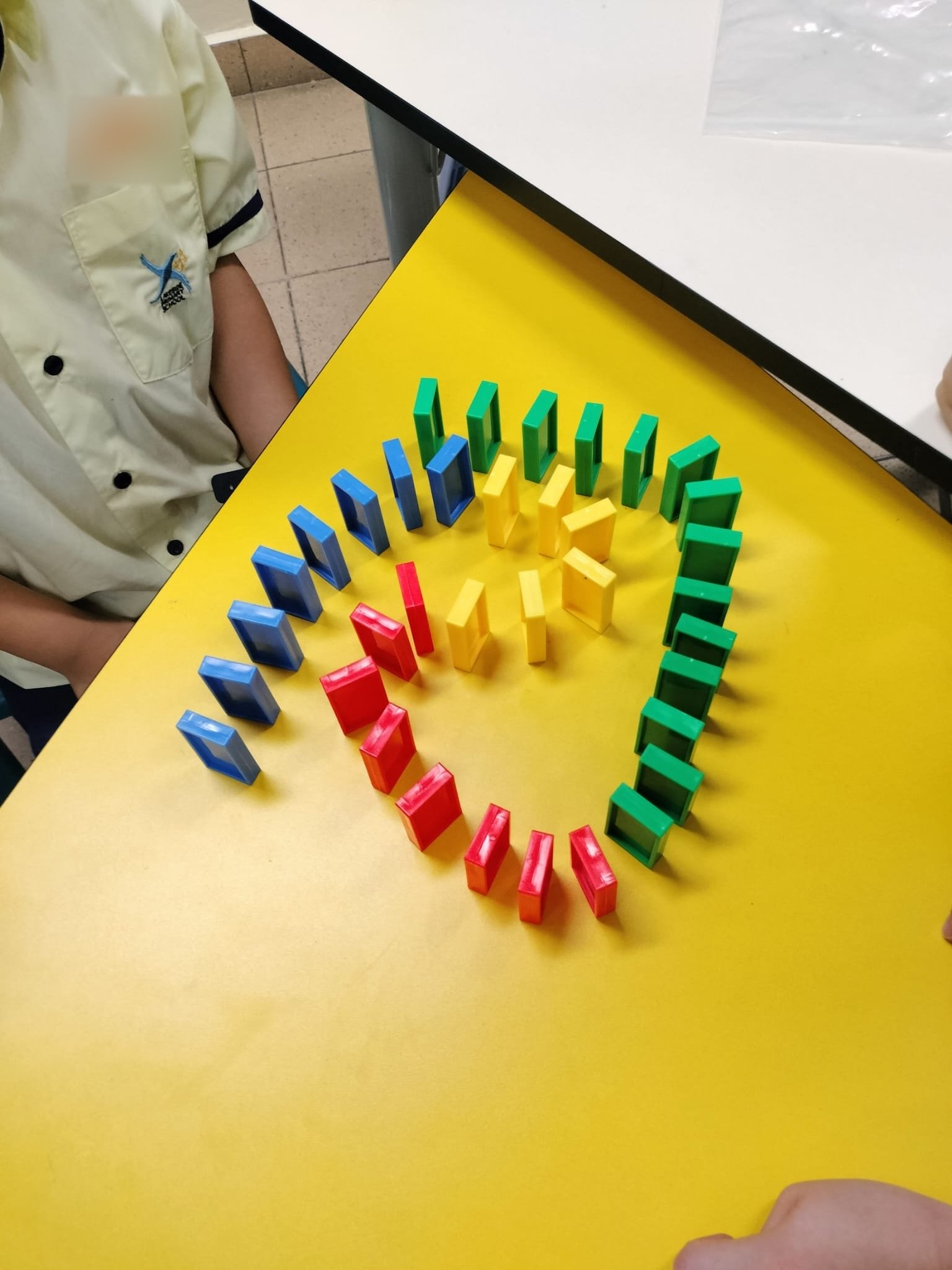
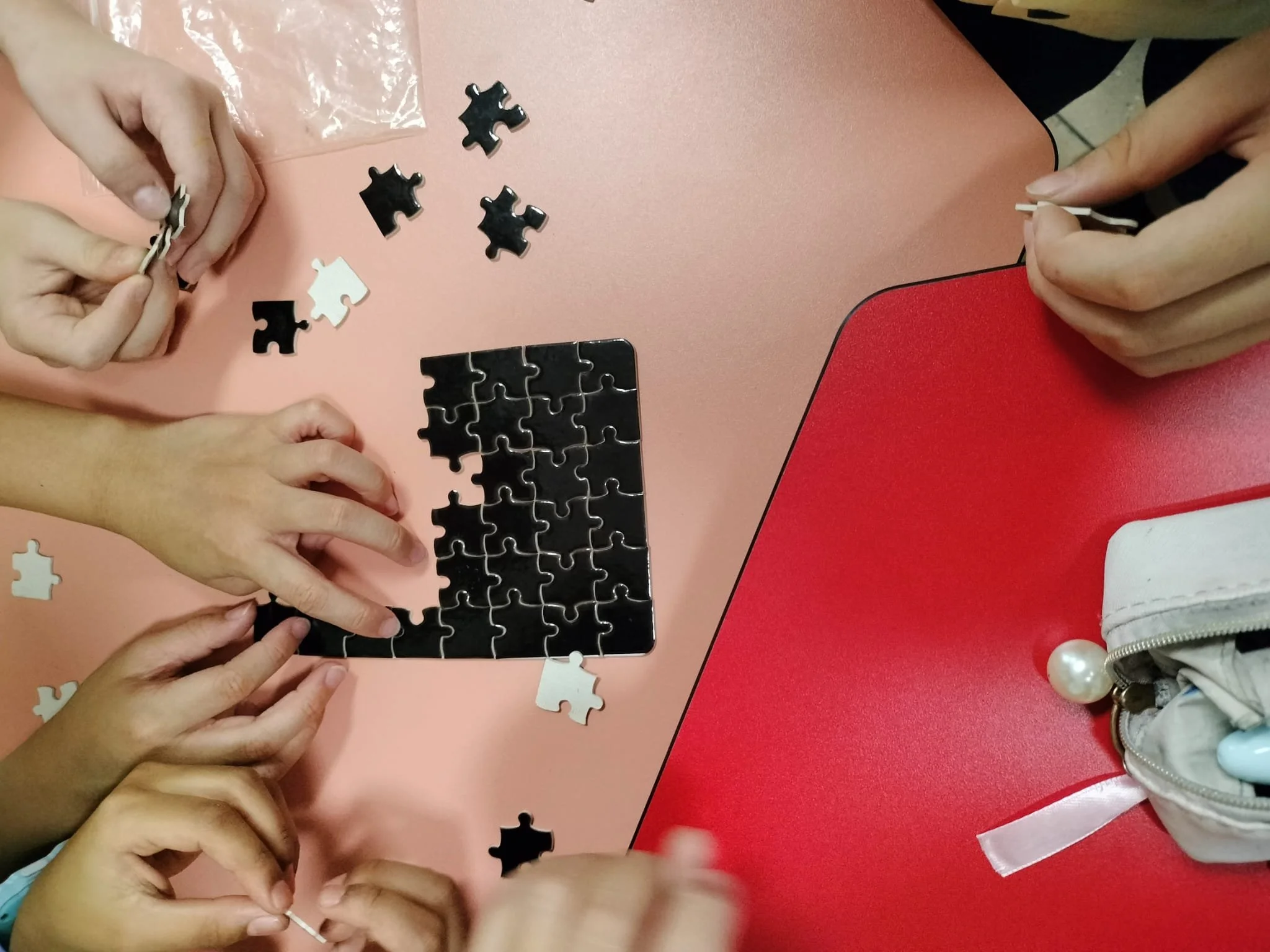
Primary 1 began with a Blackout Puzzle that asked small groups to start without being told exactly how. The coach then asked what had made it hard to start, introduced the idea of a first small step, and had each pupil say aloud one thing they would start on their own. A Domino Challenge followed, showing how easily attention is pulled away, before pupils identified their own distractions and a personal cue for staying on task, shared in pictures or out loud rather than in writing.
Primary 2 began with Cup Flip, a challenge that does not always go their way, and a guided conversation about how their bodies felt when the cup kept falling. Pupils learnt that naming a feeling is the first step to managing it, and chose their own calm-down move. Jump In Jump Out then showed them how quickly the body can move before the brain decides, which led to Stop, Think, Do, a simple three-step pause they practised in pairs. Primary 2 ran first, from 7.40am, and Primary 1 from 10.10am, and each class was matched to a coach by its behavioural profile.
The Moment That Mattered Most
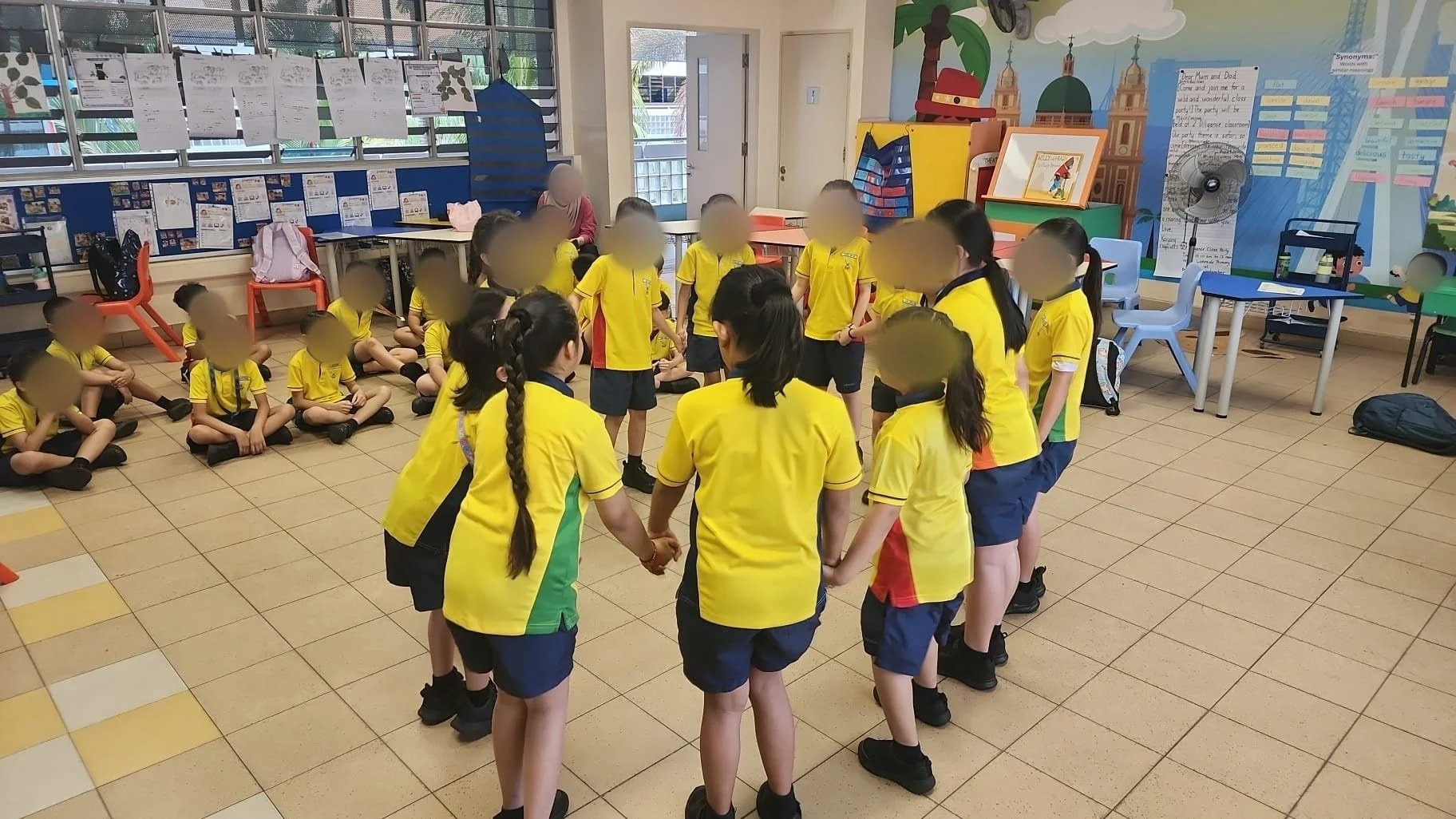
Jump In Jump Out looks like a simple movement game. A class follows a sequence of called instructions as a group, and the game is built so that, sooner or later, someone's body moves before their brain has decided. The coach then asks one question: when did your body move before your brain? For a seven year old, being able to point to that moment is the beginning of a pause. The pupils' own feedback suggests it landed. Jump In Jump Out came up again and again when Primary 2 pupils named their favourite part, and more than one of them thanked their coach for teaching them Stop, Think, Do. A strategy a child remembers by name, and connects to a game they loved, is one they can reach for the next time a big feeling arrives in class.
What the Numbers Said
At Primary 1, 217 pupils rated the programme's overall effectiveness at 81.7% and coach effectiveness at 89.3%. At Primary 2, 223 pupils rated the programme at 81.2% and their coaches at 92.0%. That is 440 pupils across sixteen classes in one morning, with 1.5 curriculum hours for each level. Coach effectiveness was 80% or higher in every one of the sixteen classes, and in one Primary 1 class, 29 of 30 pupils gave their coach's clarity the top rating. In six of the eight Primary 1 classes the lowest-scoring statement was "I know how to re-focus when I get distracted", a fair reflection of how hard that skill still is at six.
Three Things That Made the Difference
Working through the school's own language. The programme did not bring in new characters or a competing framework. Every insight was anchored to guides the pupils already knew, so what they learnt in the morning had somewhere to live in their classroom the next day.
Feel it first, name it second. Pupils did not hear about frustration, distraction or impulse before they experienced them. The puzzle, the dominoes, the falling cup and the fast-moving game came first, and the words for what had just happened came straight after, while the feeling was still fresh.
A coach for every class, and minimal writing. Sixteen classes were each led by their own coach, matched to the class by behavioural profile, so no group was left waiting for attention. At Primary 1, every commitment was spoken or shown rather than written, so the youngest pupils could take part fully without being held back by a pencil.
Thinking About Something Similar for Your Students?
Leaven Academy works with primary schools, secondary schools, junior colleges, polytechnics, ITE colleges and youth organisations across Singapore, designing programmes for the age in front of us rather than scaling down something built for older students. You can read more about our personal development programmes.
If your lower primary pupils could use the same kind of playful, practical start on focus and self-control, we would be glad to talk through what that could look like for your school. Get in touch.
“My favourite part of this workshop is the games we play and learning new strategies to not get distracted”
“Thank you for teaching me to Stop Think Do. It was a very fun game.”
“I enjoyed the activity in the school hall, where we learnt about accepting people into our group.”