
Home / Case Studies / Princess Elizabeth Primary
Student Leadership · Princess Elizabeth Primary School · Peer Support Leaders · November 2026
Peer Support Leaders Who Learned What to Say After “Hello”
Younger pupils spot the badge, and classmates remember who was kind to them in the corridor. Princess Elizabeth Primary School asked Leaven Academy to give its Peer Support Leaders the words that go with it.
Participants
28 Peer Support Leaders
Sessions
Two Fridays, 4 curriculum hours
Programme rating
82.4% overall effectiveness
Coach rating
92.8% coach effectiveness
Being a Peer Support Leader at a primary school is mostly about being the child others feel safe walking up to. Younger pupils spot the badge. Classmates remember who was kind to them in the corridor. What the badge does not hand over is the next sentence: what to say when a friend goes quiet, how to give a kind word that is also an honest one, and what to do when two friends stop speaking to each other.
Princess Elizabeth Primary School wanted its Peer Support Leaders to have that next sentence. Over two Fridays in November, 28 of them sat on the floor with their coach and practised it with each other.
What Princess Elizabeth Primary School Needed
Peer Support Leaders carry real responsibility. They are the first to notice when a classmate is left out, and the first to be asked for help. The school’s focus for this cohort was clear: meaningful conversations with peers in the first session, then perspective-taking, speaking kindly and helping friends through disagreements in the second. The pupils were willing. What they lacked was a practical way to turn goodwill into words they could use at recess the following Monday. Princess Elizabeth Primary School engaged Leaven Academy to build that.
How We Designed It
Both sessions followed the Leaven Learning Cycle, credited to Kolb, so pupils practised each idea with their peers instead of only hearing about it.
Session 1
Every Conversation Counts
Pupils moved from starting a conversation to keeping one going, using the IFR approach (Inquire, Follow up, Relate), and on to listening well and reading the signals, using the B.A.N.D. framework.
Session 2
Standing With Your Friends
Pupils learnt to see a situation from another person’s side, to speak kindly while staying neutral, and to help friends work through a disagreement using the C.U.R.E.S framework (Cool Down, Understand, Reply, Empathise, Suggest).
Both sessions
Heard from the pupils
Each session ended with the pupils completing their own evaluation, so the school heard from them directly.
The Moment That Mattered Most
The turning point came in the second session, when the pupils stopped being an audience and started being the speakers. Pupils who had spent the first session listening began offering their own words for how they would help a friend, in front of the whole group. It was not polished, and it was not meant to be. They were doing the exact thing the school wants from them, and their classmates saw that a kind, clear sentence is something a primary school pupil can say. Asked for their favourite part of the programme, one pupil wrote “Learning how to talk to someone”.
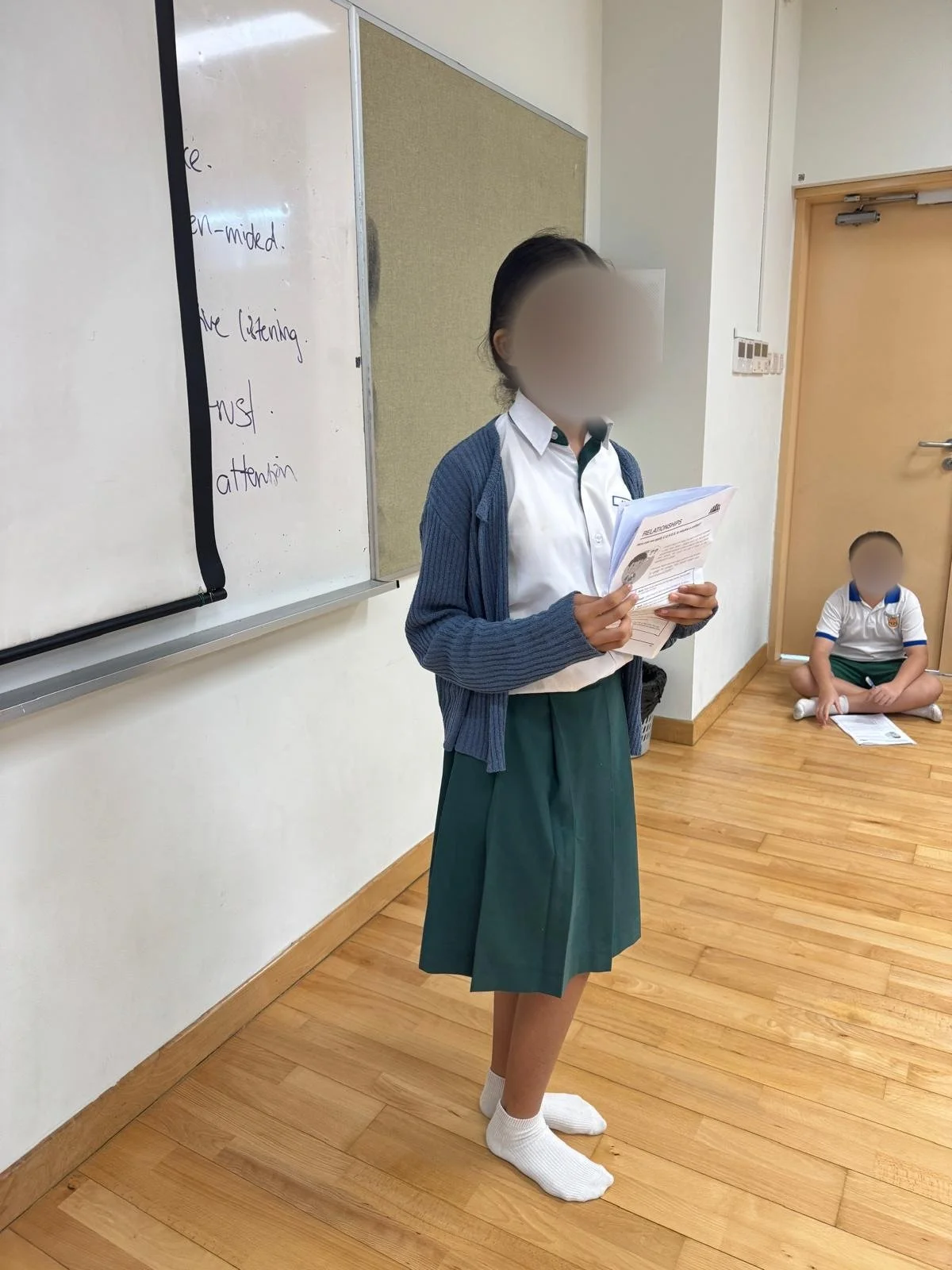
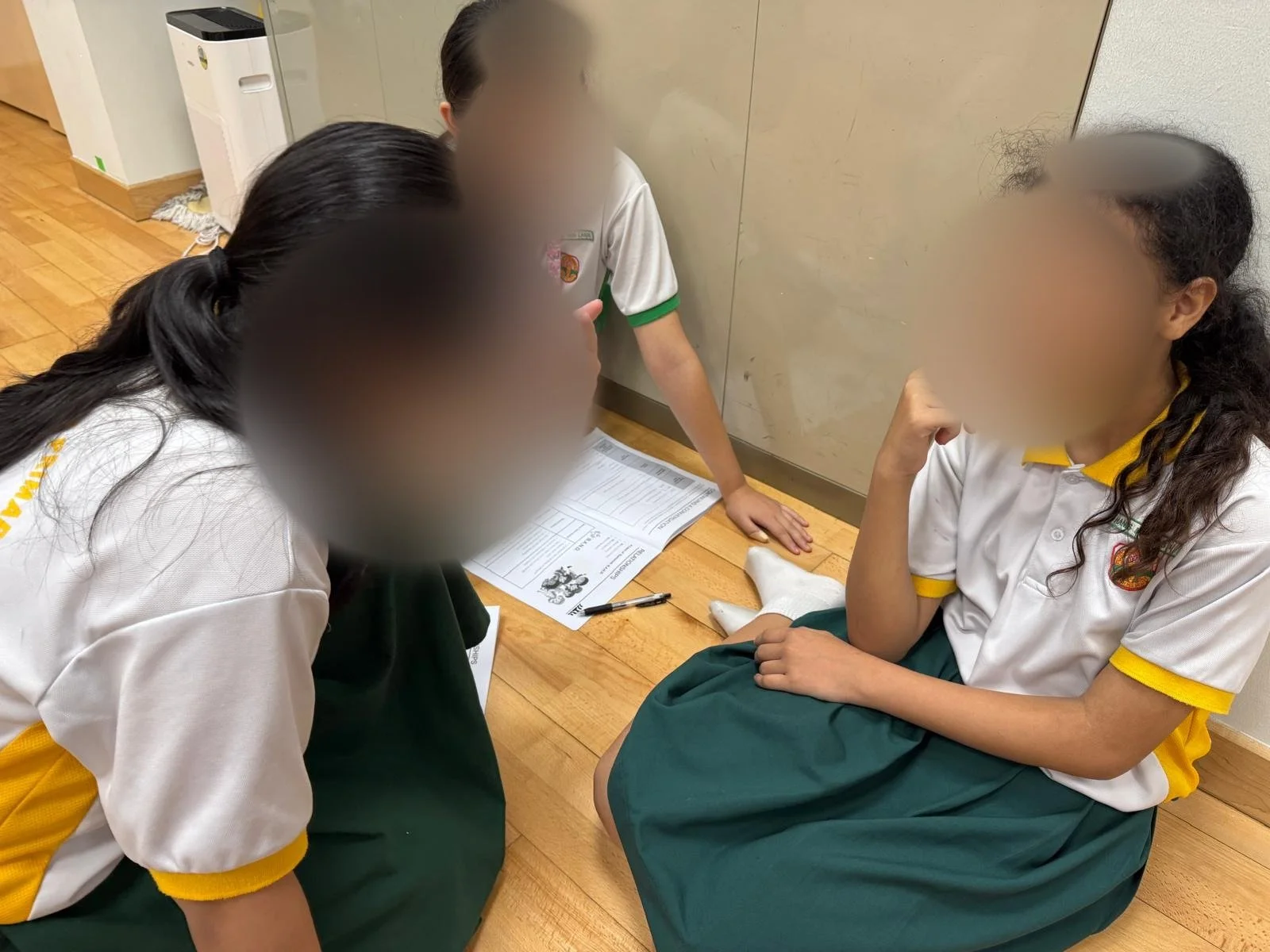
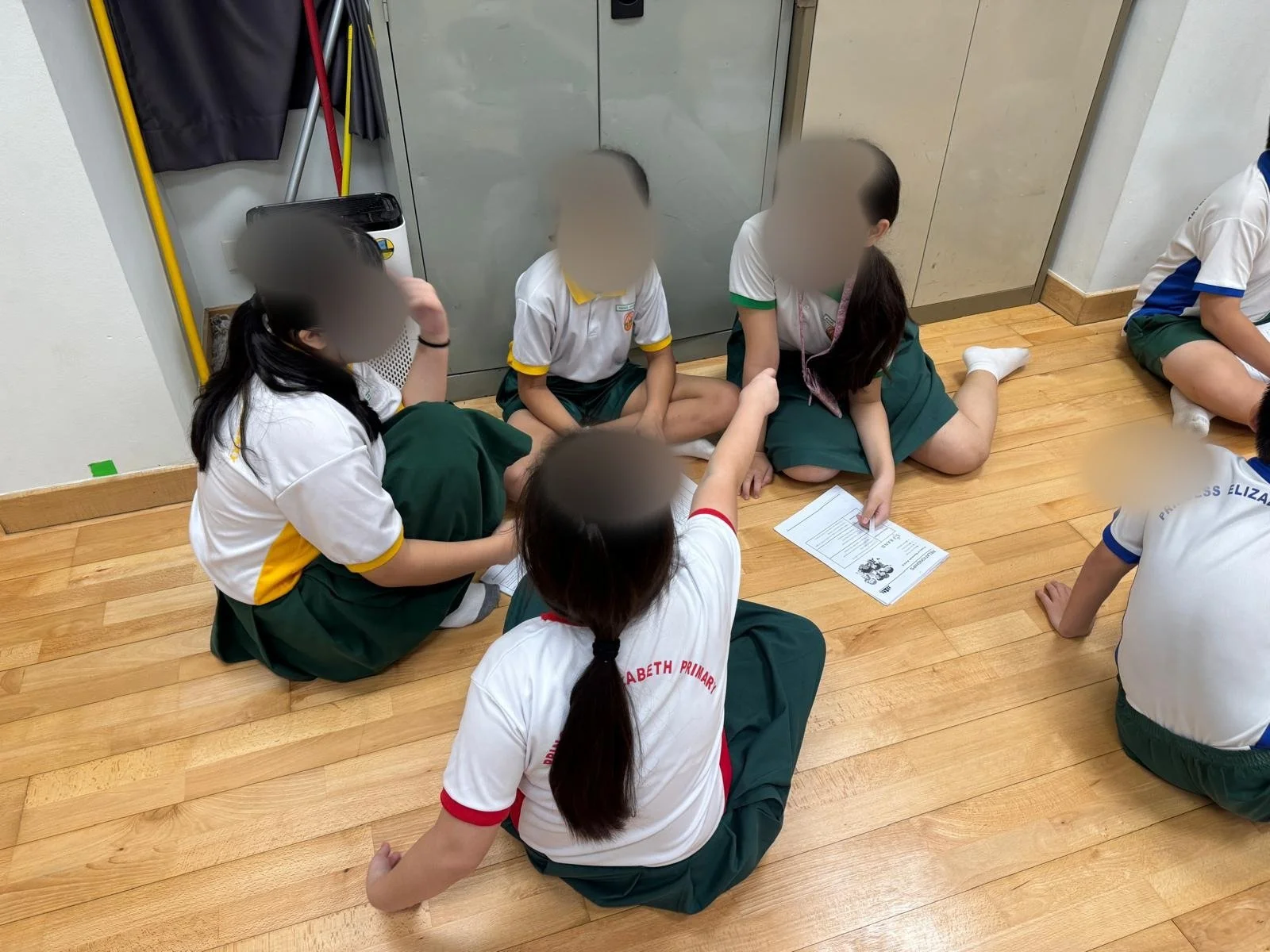
In the room
Peer Support Leaders at Princess Elizabeth Primary School, November 2026. Faces are blurred.
What the Numbers Said
Across the two sessions, pupils rated programme effectiveness at 82.4% and coach effectiveness at 92.8%. Twenty-eight Peer Support Leaders took part over four curriculum hours, and programme effectiveness rose from 78.0% in the first session to 86.8% in the second. In plain terms, the pupils found the coach very clear, and they grew more confident that they could apply what they were learning as the programme went on.
80.0%
Learnt how to start a conversation
78.6%
Learnt how to continue a conversation
75.0%
Learnt how to listen to peers and use it in their role
86.4%
Learnt how to speak kindly and give feedback to friends
84.8%
Learnt how to help friends resolve a disagreement
92.8%
Learnt that they need to be kind to friends
Three Things That Made the Difference
Practise with someone you do not know well Peer Support Leaders will meet children they have never spoken to, so the practice happened between pupils who did not usually sit together. The skill was learned in the situation it is needed in.
Kindness taught as a skill, not a value Pupils were not told to be kind. They were given words, a sequence for tricky moments and a framework they could recall, so kindness became something they could do on purpose.
Every voice heard Participants said their coach made sure everyone had a chance to share their answers. In a leadership role built on listening, being listened to first mattered.
Thinking About Something Similar for Your Students?
Leaven Academy works with primary and secondary schools, junior colleges, polytechnics, ITE colleges and youth organisations across Singapore, building student leadership and communication programmes that students can use the next day.
If you are thinking about something similar for your Peer Support Leaders or student leaders, we would be glad to talk it through.
“Thank you for teaching me and I will follow your advice.”
Participant, Princess Elizabeth Primary School
Want this for your student leaders?
Tell us about your students and we will talk through what it could look like. We reply within 2 working days.