
Personal Leadership · Woodlands Ring Secondary School · May 2026
They Came as Student Leaders
They Left as Project Managers
Every school has student leaders. Councillors, Peer Support Leaders, student representatives of every kind. What most of them share, beyond the title and the responsibilities, is a gap between intent and execution. They want to run good events, lead good initiatives, serve their schoolmates well. What they often lack is a structured method for turning that intent into a plan that works under pressure.
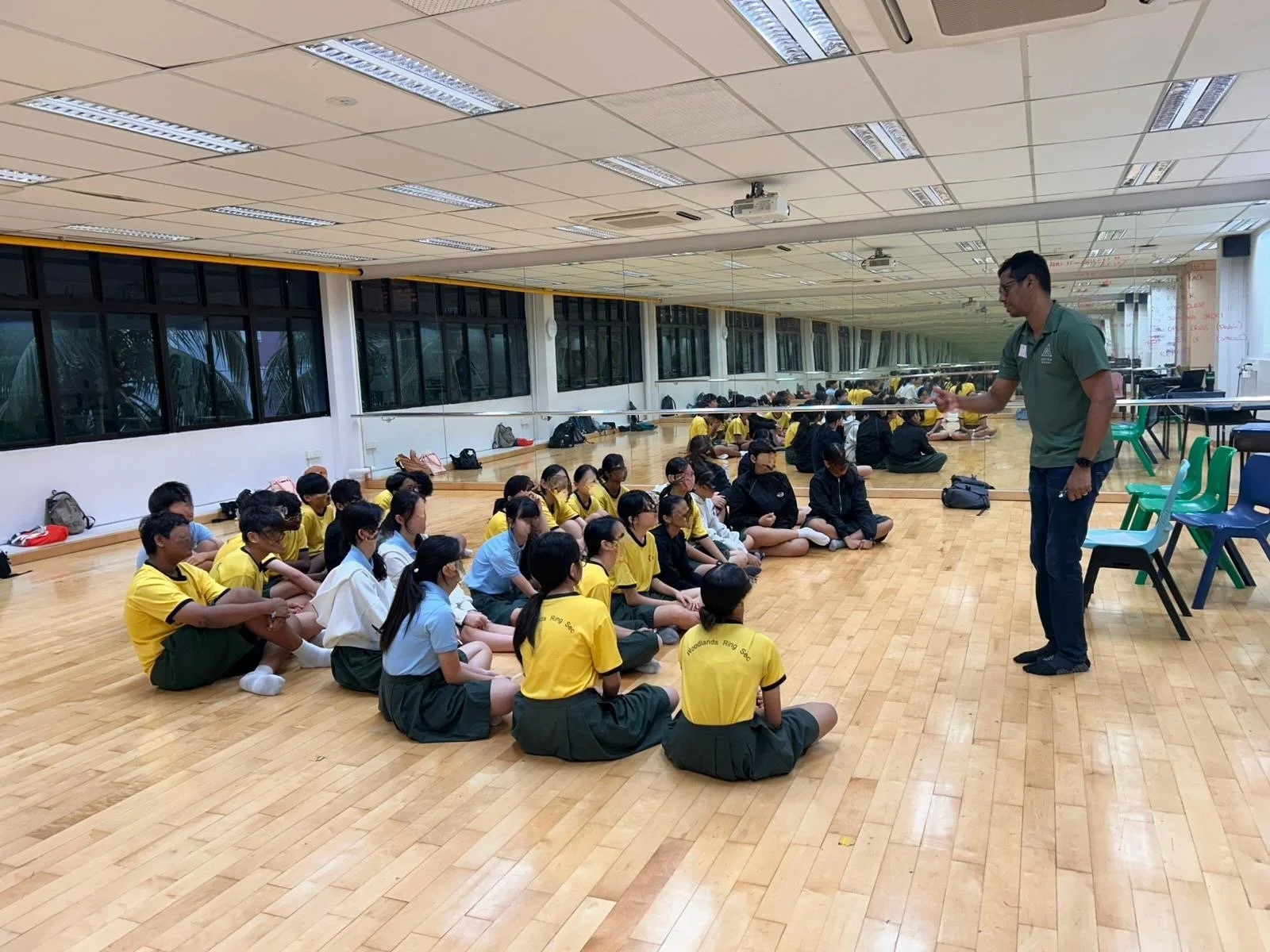
That was the gap Woodlands Ring Secondary School brought to Leaven Academy in May 2026. Twenty-eight Sec 2 student leaders — Councillors and PSLs — gathered in the school hall for a four-and-a-half-hour Project Management Workshop designed and delivered by Coach Mugan and Coach Sheikh. The programme was not a lecture about leadership theory. It was a working session built on a single framework and three hours of increasingly pressured application.
By the time it ended, students had planned, built, failed, revised, and presented. They had experienced what it actually feels like to manage a project from a blank page to a deliverable, under constraints, in a team, with a deadline. And they had a framework they could carry into every school event, every committee, every leadership role they would take on from that day forward.
What Woodlands Ring Secondary School Needed
Woodlands Ring Secondary's Councillors and PSLs are young people who have already been identified as having leadership potential. They are trusted by their school to organise events, support their peers, and represent their cohort. What many of them had not yet developed was the practical toolkit to do that work systematically.
The challenge Mr Choy Chengzhen brought to Leaven Academy was not about building motivation or confidence. These students had both. The need was for a replicable, practical framework that would help student leaders plan more thoroughly, facilitate team discussions more productively, implement projects more effectively, and evaluate outcomes with enough rigour to improve next time. Leaven Academy was engaged to deliver a workshop that would do all four, in a single session, through direct experience rather than instruction.
How We Designed It
The session was built around Leaven Academy's Experiential Learning Model and the MASK framework — developing student leaders from the inside out, beginning with Mindsets and Attitudes before moving into Skills and Knowledge. The entire programme was anchored on the P.I.E. framework: Plan, Implement, and Evaluate. Every activity, every handout, and every debrief point mapped back to one of those three pillars.
The session opened with an energiser icebreaker that set a high-energy, collaborative tone immediately — students on their feet and working together before a single concept had been introduced. From there, Coach Mugan and Coach Sheikh introduced the P.I.E. framework and moved directly into the Money Heist simulation: a fast-paced, time-pressured activity that dropped students into the experience of planning and executing under constraints before they had been given any planning tools at all. The simulation was designed to surface exactly the kinds of difficulties that student-led projects encounter — miscommunication, poor task allocation, last-minute changes — so that the planning frameworks that followed would arrive not as abstract theory but as direct solutions to problems students had just felt.
The planning phase that followed was structured and progressive. Students worked through facilitation techniques, brainstorming methods, objective-setting, task listing, and resource mapping — each concept introduced briefly and immediately applied through a hands-on worksheet activity on the floor. The room looked like a planning session in full swing: students in clusters, documents spread across the hall floor, animated discussions about what needed to happen and in what order.
After the break, the Bridge The Gap challenge brought everything together. In Sprint 1, teams applied their planning tools — objectives, task lists, resource plans — to a real hands-on build under constraints. When Sprint 1 exposed gaps and contingencies, students paused to build formal contingency plans before re-entering Sprint 2 with a revised approach. Both sprints required not just planning skill but active communication: the facilitation techniques practised in the morning had to be deployed in a real, pressured team situation. The session closed with each team standing to present their project debrief — students facilitating a structured review of their own work, practising the Evaluate pillar of P.I.E. in front of their peers.
The Moment That Mattered Most
It came near the end of the session, during the project debrief presentations.
Students who had arrived that morning as participants were now standing at the front of the room, leading structured reviews of their own projects. They were naming what had worked and what had not. They were identifying the decisions that had cost them time in Sprint 1 and explaining how their contingency plans had changed the outcome in Sprint 2. They were, in short, behaving exactly like the project managers the session had been designed to develop.
The shift is subtle when you describe it, but unmistakable when you see it. Students who had needed to be told what to do in the morning icebreaker were now directing their own debrief. Students who had argued about who should lead during the Money Heist were now facilitating calmly and sharing responsibilities naturally. The P.I.E. framework had given them a structure, and the pressure of the day had made that structure their own. That is the educational outcome this programme is built to produce.
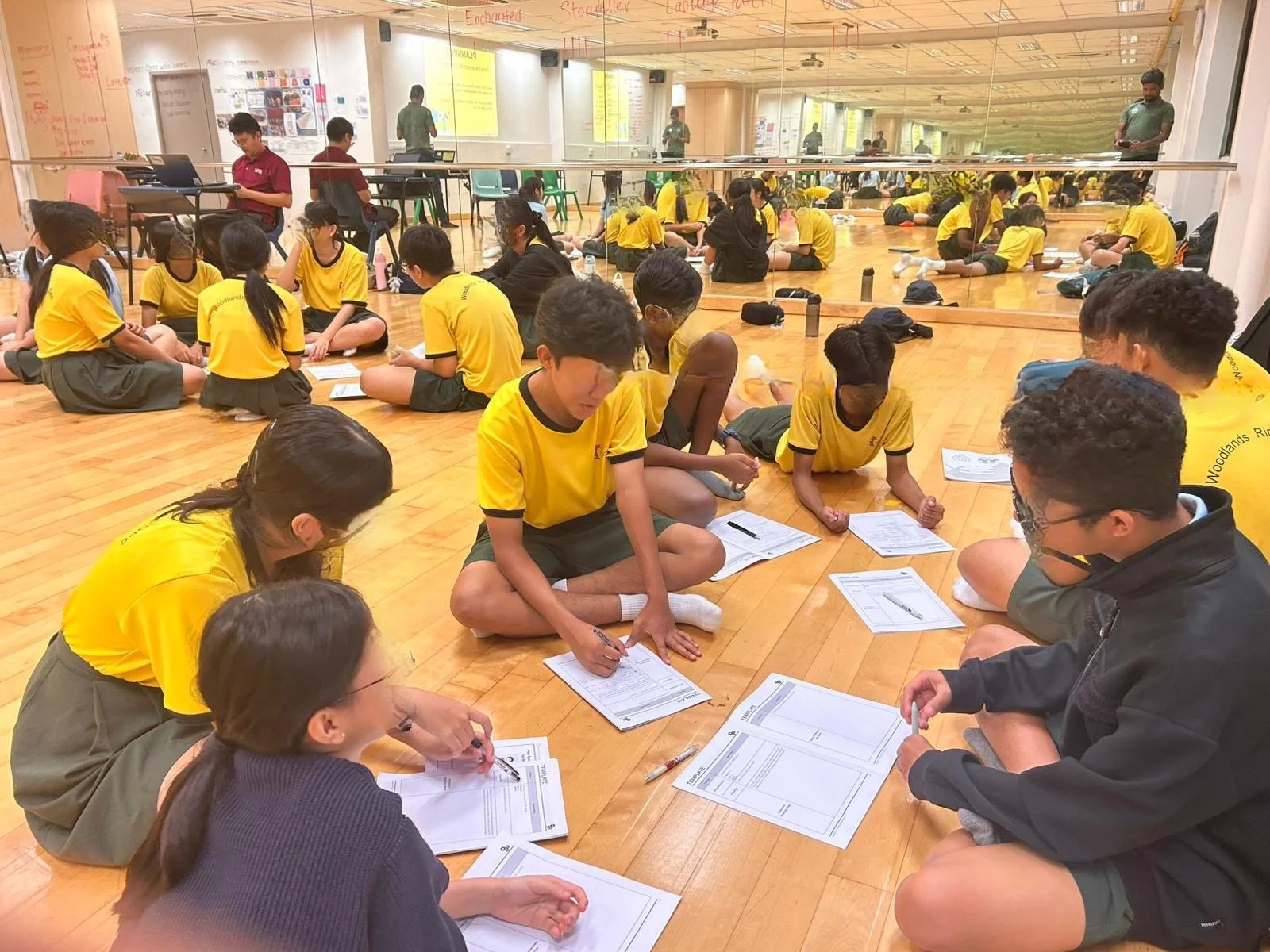
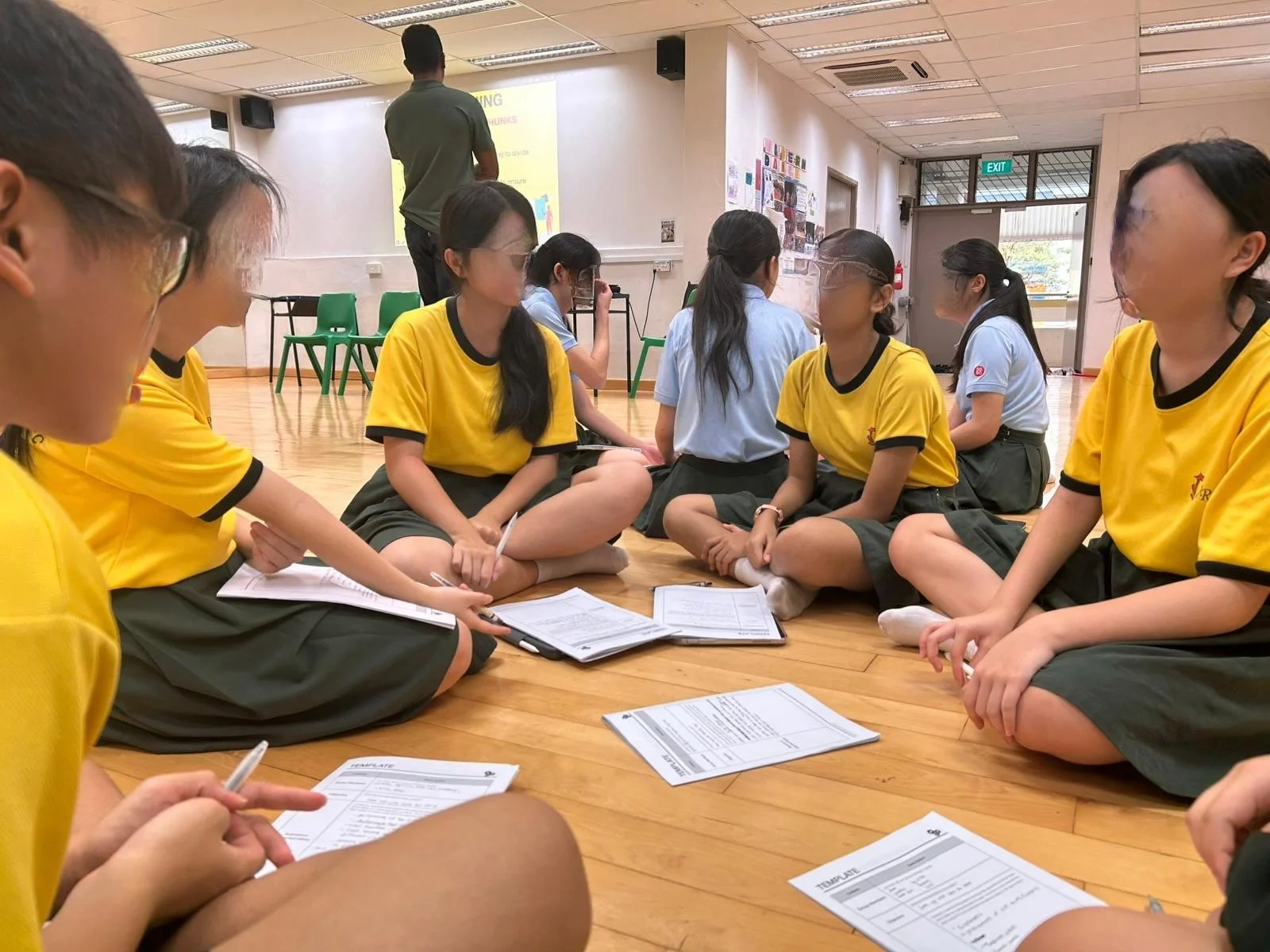
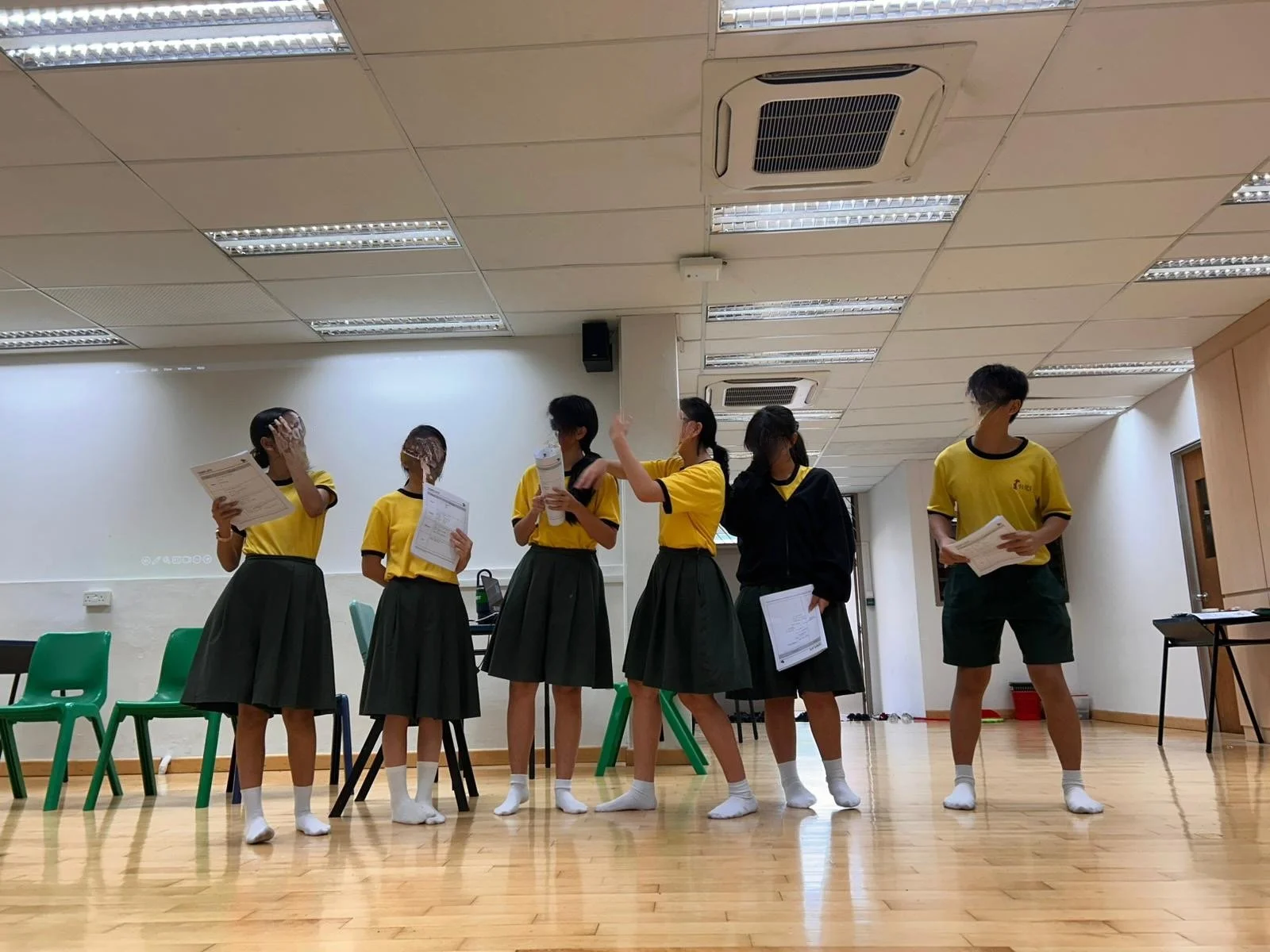
Students engaged during the workshop - Planning, discussing, presenting
What the Numbers Said
Twenty-eight participants completed the post-programme evaluation at the close of the session. Overall programme effectiveness was rated at 89.7%. Coach effectiveness was rated at 93.6%. The two highest-rated individual outcomes — at 92.14% and 92.86% respectively — were the ability to apply what was learnt to an actual student project, and overall benefit from the programme. These are the outcomes that matter most: not simply whether students understood a framework, but whether they could see themselves using it.
Across all seven measured outcomes, no participant rated any item below 3 out of 5. Understanding of the P.I.E. framework itself came in at 84.29% — a realistic score for a half-day introduction, and one that provides a clear baseline for schools that choose to run a follow-up or reinforcement session.
Three Things That Made the Difference
Teaching planning through failure, not instruction. The Money Heist simulation ran before any planning framework was introduced. Students experienced firsthand what happens when a team acts without clear objectives, misallocated tasks, or underestimated their resources. By the time the planning worksheets arrived, students were not filling in templates out of compliance. They were solving a problem they had already felt.
Making facilitation a learnable skill, not a personality trait. Many student leaders assume that good facilitation — drawing out quieter voices, managing discussion productively, keeping a group on track — is something you either have or you do not. The session treated it as a skill set with specific, teachable techniques. The F.A.C. framework gave students tools for active participation and active questioning that they could name, practise, and deliberately use. For student councils and PSL groups, where internal team dynamics can be a significant barrier to getting things done, this module alone carries considerable practical value.
Contingency planning arrived at the right moment. The decision to introduce contingency planning between Bridge The Gap Sprint 1 and Sprint 2 — rather than during the morning planning phase — was deliberate. Students needed to have experienced a plan going wrong before they would engage seriously with the discipline of preparing for plans going wrong. The sequencing made contingency feel necessary rather than theoretical.
Thinking About Something Similar for Your Students?
Leaven Academy partners with secondary schools, junior colleges, polytechnics, ITE colleges, and youth organisations across Singapore to deliver personal leadership, communication mastery, and financial maturity programmes designed for young people at different stages of development.
If you are looking to build practical project management and leadership skills in your student leaders, we would be glad to have a conversation about what that could look like for your school.
“When we could work together to help each other do the escape room type activity — that was the best part”
“Thank you for making my four hours fun and engaging!”
“Whatever it is, the way you tell your story online can make all the difference.”